



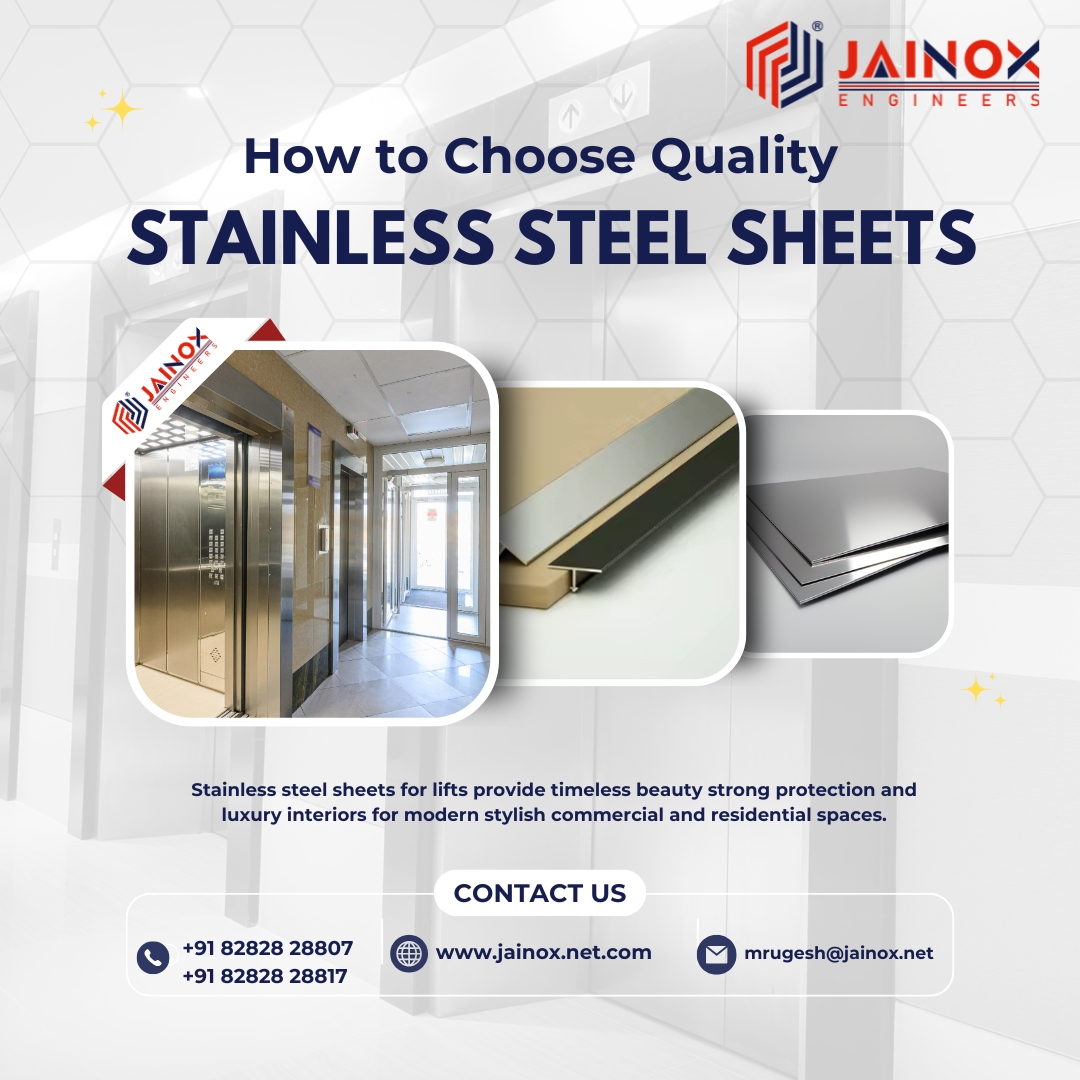
How to Select Quality Stainless Steel Sheets Smartly
Choosing the right stainless steel sheets can transform the strength, durability, and finish of your entire project. Whether you manufacture industrial equipment, fabricate architectural components, or source materials for export, your selection directly affects performance and cost.
However, many buyers focus only on price. As a result, they compromise on grade, finish, or certification. Instead, you should evaluate material composition, surface finish, thickness tolerance, corrosion resistance, and supplier credibility before placing an order.
In this comprehensive guide, you will learn exactly how to choose quality stainless steel sheets with confidence. Moreover, you’ll discover expert buying tips that help you rank higher in procurement efficiency, reduce waste, and ensure long-term durability.

Why Stainless Steel Sheets Matter in Modern Industries
Stainless steel has become one of the most trusted materials in the construction, food processing, automotive, marine, pharmaceutical, and interior design sectors. Because it resists corrosion, handles heat effectively, and maintains structural integrity, industries rely on it for critical applications.
Furthermore, manufacturers prefer stainless steel sheets because they offer:
- High tensile strength
- Excellent corrosion resistance
- Attractive surface finish
- Long service life
- Easy fabrication and welding
When you choose the right material, you reduce maintenance costs. Consequently, you improve operational efficiency and customer satisfaction.
Understanding Stainless Steel Sheets Before You Buy
Before you finalize a purchase, you must understand what defines quality. Not all sheets are created equal. Although two sheets may look identical, their chemical composition and performance characteristics may differ significantly.
Grade Selection: The Foundation of Quality Stainless Steel Sheets
Grades determine the material’s corrosion resistance, strength, and weldability. Therefore, you should always begin your evaluation with grade analysis.
Common grades include:
- 304 Grade – Ideal for kitchen equipment, food processing, and general fabrication
- 316 Grade – Suitable for marine and chemical environments
- 430 Grade – Cost-effective option for decorative applications
If your project requires exposure to moisture or chemicals, then you should prioritize higher corrosion resistance. On the other hand, if budget matters more than extreme durability, you may choose a more economical grade.
Thickness and Tolerance Standards
Thickness affects load-bearing capacity and fabrication performance. Buyers often overlook tolerance levels, yet they directly impact structural strength.
For example:
- Thin sheets work well for decorative panels.
- Medium thickness suits machinery covers.
- Heavy gauge sheets support industrial frameworks.
Manufacturers sometimes allow tolerance variations. However, excessive deviation reduces reliability. Therefore, always verify tolerance compliance with ASTM or equivalent standards.
Surface Finish: More Than Just Appearance
Surface finish influences aesthetics, hygiene, and corrosion resistance. For instance:
- 2B Finish – Smooth and widely used for industrial applications
- No. 4 Finish – Brushed finish for architectural use
- Mirror Finish – Decorative and reflective applications
If you manufacture food-grade equipment, you must select a hygienic finish. Otherwise, bacteria can accumulate in surface imperfections.
Key Factors That Define Quality Stainless Steel Sheets
Now let’s explore the practical checklist professionals use when selecting high-performance material.
Chemical Composition and Certification
You should always request a Mill Test Certificate (MTC). This document confirms the chemical composition and mechanical properties of the sheet.
Without certification, quality cannot be verified. Therefore, never skip this step.
Look for:
- Chromium percentage
- Nickel content
- Carbon levels
- Mechanical strength data
Certified sheets ensure consistency and compliance with international standards.
Corrosion Resistance Testing
Corrosion resistance depends on grade and environment. If your application involves saltwater or chemicals, you must select sheets with superior resistance.
Manufacturers often test material in controlled environments. These results should be shared upon request. Consequently, you can compare performance data before purchasing.
Fabrication and Weldability
High-quality stainless steel sheets should cut, bend, and weld easily. Poor material quality leads to cracks or distortion during fabrication.
Therefore:
- Verify machinability properties
- Confirm weld compatibility
- Evaluate heat resistance
When fabrication becomes smoother, productivity increases.
Supplier Reputation and Industry Experience
Even the best grade can fail if supplied by an unreliable vendor. You should choose suppliers who:
- Provide consistent quality
- Offer competitive pricing
- Deliver on time
- Share proper documentation
Additionally, experienced suppliers guide you toward the right material based on your application.
How to Compare Stainless Steel Sheets for Different Applications
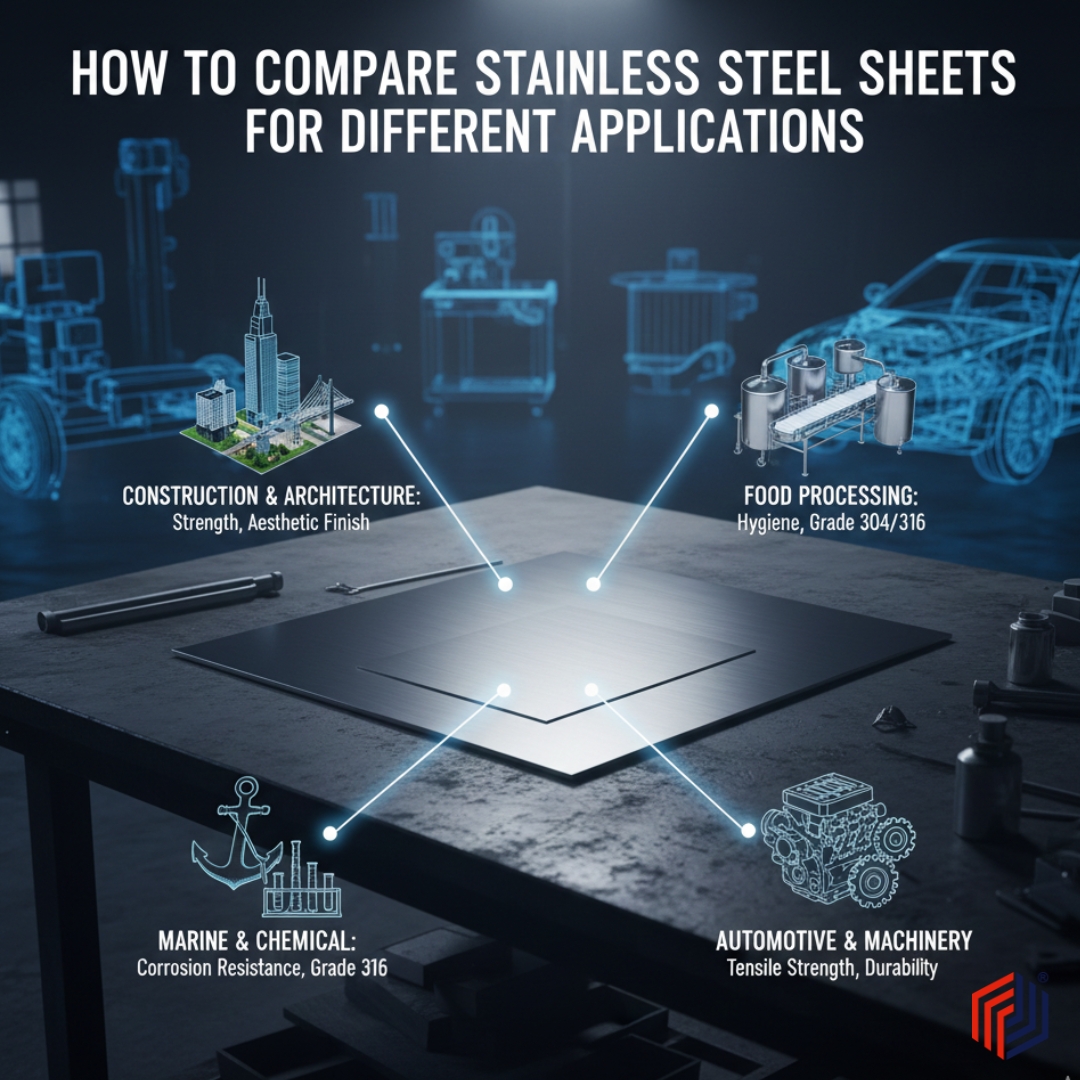
Different industries demand different specifications. So instead of choosing blindly, match the sheet to its intended use.
Construction and Architecture
Builders prioritize strength and aesthetic finish. Therefore, they often select brushed or matte finishes with structural thickness.
Food Processing Equipment
Hygiene comes first. As a result, manufacturers typically prefer 304 or 316 grade with smooth finishes.
Marine and Chemical Plants
Corrosion resistance remains critical. Consequently, 316 grade performs better in aggressive environments.
Automotive and Machinery Parts
Here, tensile strength and durability matter most. Thickness and hardness must align with design requirements.
Common Mistakes to Avoid When Buying Stainless Steel Sheets
Even experienced buyers sometimes make costly errors. However, you can avoid them by following these guidelines.
Choosing Price Over Quality
Low-cost sheets often lack proper certification. Although they reduce upfront expenses, they increase long-term maintenance costs.
Ignoring Grade Specifications
If you select the wrong grade, corrosion may occur prematurely. Therefore, always align grades with environmental conditions.
Overlooking Surface Finish Requirements
A decorative project demands a refined finish. Meanwhile, industrial use may not require aesthetic perfection.
Skipping Supplier Verification
Some buyers assume all suppliers maintain the same standards. Unfortunately, quality inconsistencies can occur. Always verify credentials.
Expert Tips to Ensure Long-Term Performance
If you want maximum return on investment, apply these expert recommendations.
- Request samples before bulk purchase.
- Conduct third-party inspection when necessary.
- Confirm packaging quality to prevent surface damage.
- Compare multiple quotations, but evaluate specifications carefully.
- Ask about after-sales support and return policies.
By implementing these steps, you reduce risk significantly.

Why Quality Stainless Steel Sheets? Improve ROI.
When you invest in high-grade stainless material:
- Maintenance costs decrease
- Product lifespan increases
- Structural integrity improves
- Customer trust grows
Although the initial investment may appear higher, long-term savings justify the decision.
Top Rated Stainless Steel Sheets for Industry
Selecting quality stainless steel sheets requires more than comparing prices. Instead, you should analyze grade, thickness, finish, certification, and supplier reliability.
When you follow this structured approach, you minimize risk and maximize performance. Moreover, you position your business for long-term success.
If you are sourcing stainless steel sheets for industrial, commercial, or export projects, always prioritize quality over shortcuts. Because ultimately, strong foundations create lasting results.